EU Opens Formal Antitrust Probe Into Coca-Cola Bottler CCEP
The European Commission has opened a formal antitrust probe into Coca-Cola bottler CCEP over suspected market partitioning in the 27-member bloc, with fines capped at 10% of global annual revenue.
Wire notes
- The European Commission opened a formal antitrust investigation into Coca-Cola Europacific Partners (CCEP) announced Monday
- Inspections in the non-alcoholic beverages sector began in March 2025; Bloomberg reported Coca-Cola bottlers were targets
- EU competition fines can reach 10% of a company's global annual revenue
- The Commission closed a prior Coca-Cola investigation without action in 2023
- Mondelez was fined €337.5 million in May 2024 for blocking cross-border sales
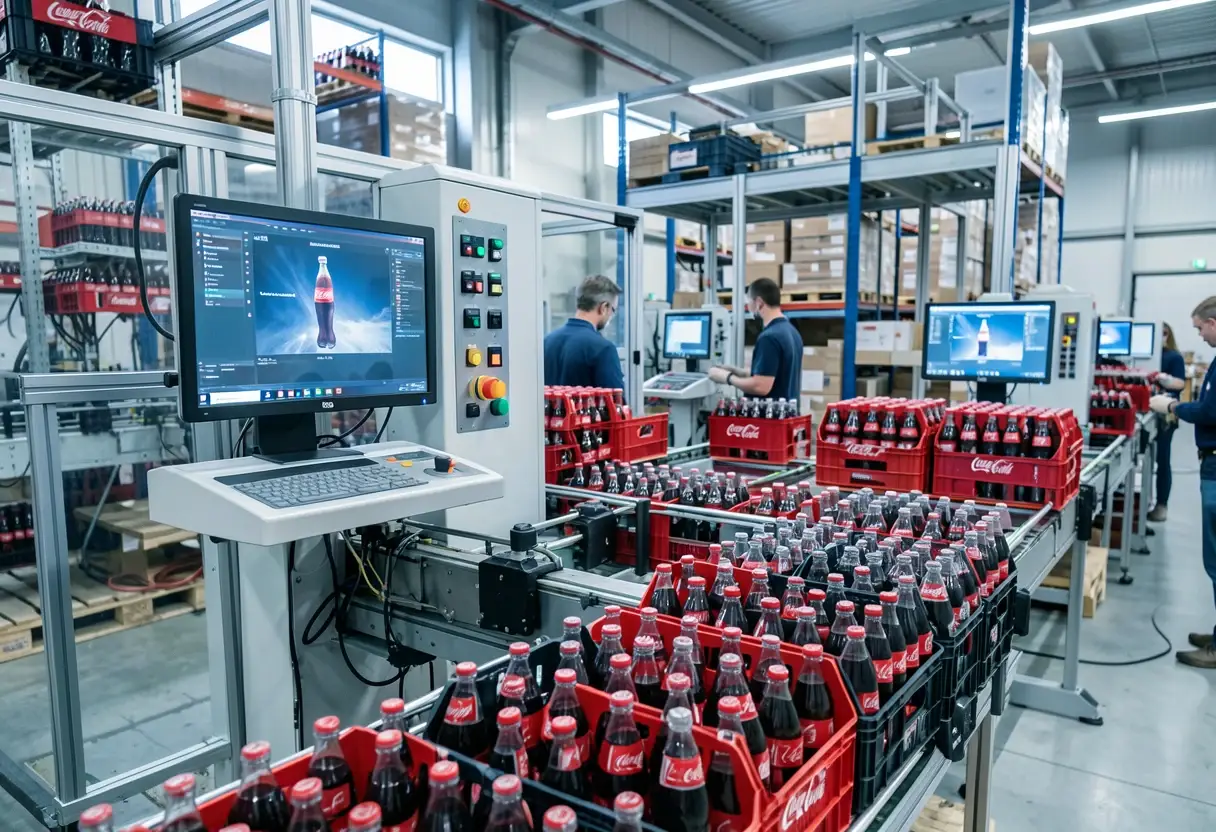
The European Commission has opened a formal antitrust investigation into Coca-Cola Europacific Partners (CCEP) on suspicion it illegally partitioned EU national markets and abused its dominant position in wholesale soft drink supply. The probe carries maximum penalties of up to 10% of a company's global annual revenue.
Teresa Ribera, the EU's top antitrust official, said on Monday: "Estamos investigando" whether the UK-headquartered CCEP "vem criando barreiras entre os mercados nacionais, dificultando a compra de produtos pelos varejistas em outros países e a obtenção de condições comerciais mais vantajosas."
What does the Commission allege?
The Brussels-based executive arm suspects CCEP abused its dominance in the wholesale supply of carbonated soft drinks and sports drinks to off-trade customers — outlets that sell beverages for consumption elsewhere. The alleged conduct has two strands:
- Hindering cross-border trade in its products within the 27-member bloc
- Preventing wholesale customers from negotiating deals in different EU countries
The practical effect, in the Commission's view, is that retailers cannot source CCEP products in cheaper national markets, locking them into country-specific commercial terms.
How did the case start?
In March 2025, the Commission announced unannounced inspections at the premises of unidentified companies in the non-alcoholic beverages sector across several member states. Bloomberg News later reported that Coca-Cola bottling units were among the targets of those raids.
CCEP, which bottles Coca-Cola and other soft drinks, is controlled by Spain's Daurella family. The Coca-Cola Company holds a minority stake.
What has CCEP said?
The company said in a statement that, as "uma empresa com presença consolidada há muitos anos em toda a Europa," it takes competition law "muito a sério" and is cooperating fully with Brussels regulators. It did not address the specific allegations.
Is a fine certain?
No. At this stage the Commission has made no finding of guilt, and it faces no legal deadline to conclude the investigation. Regulators frequently drop cases when initial suspicions cannot be substantiated — a point with direct relevance for CCEP.
That outcome has already touched Coca-Cola once. In 2023, the Commission closed a preliminary investigation into The Coca-Cola Company, whose brand portfolio spans Sprite, Fanta and Monster, and its bottling units. That probe had examined suspicions the companies abused dominance by granting conditional discounts to retailers to harm competitors. It ended without action.
Earlier still, the EU scrutinised Coca-Cola over exclusivity agreements and customer discounts. That case closed after the company accepted a set of commitments that addressed the bloc's concerns.
Why market-splitting draws EU fire
The Commission takes a historically hard line against companies that carve up the single market — designed to function as one integrated trading area — to charge different prices by region and restrict competition. The most recent precedent: in May 2024, Mondelez International was fined €337.5 million (about $370 million) for illegally blocking cross-border sales of its chocolates, biscuits and coffees.
The takeaway: no fine is on the table yet, but CCEP now faces an open-ended probe under a Commission doctrine that has already cost a major food multinational hundreds of millions of euros.
via oglobo.com (Source)
More from Tom Whitfield
Show full bio
Staff writer covering companies, deals and strategy in marketing, advertising, marketing technology, media, SEO and search at Marketing Herald.
435 articles
More on the wire
- Brazilian Right Attacks Big Tech Antitrust Bill as Censorship
- Shopee's Brazil credit book hits R$8.7bn, overtakes Mercado Livre
- Economists Urge Brazil's Chamber to Pass Bill Expanding Cade Powers Over Big Techs
- O Globo Editorial Presses Brazil's Chamber to Pass Big Tech Bill
- Challenger CPG Brands Reshape Category Marketing as Deal Value Doubles