Meta’s LED render revives the ‘perv glasses’ privacy debate
Meta’s November 17 LED render and rivals’ visible camera mismatch reopen a privacy debate shaped by two years of indicator tampering and the “perv glasses” label.
Wire notes
- On November 17, Meta product lead David Woodland posted a now-deleted X render of Gentle Monster cateye-style glasses with the message “I plead the fifth.”
- Meta launched own-branded smart glasses this summer without Ray-Ban or Oakley branding; some models cost less than Ray-Ban-branded pairs.
- Over two years, users disabling the recording LED led to the social-media label “perv glasses.”
- Meta has issued several software patches that disable the camera when the LED is tampered with.
- Warby Parker and Gentle Monster glasses associated with Samsung and Google use a camera LED that differs visually from the opposite-side camera.
By Amara Osei
On November 17, Meta product lead David Woodland posted a now-deleted render of Gentle Monster cateye-style glasses on X, writing, “I plead the fifth.”
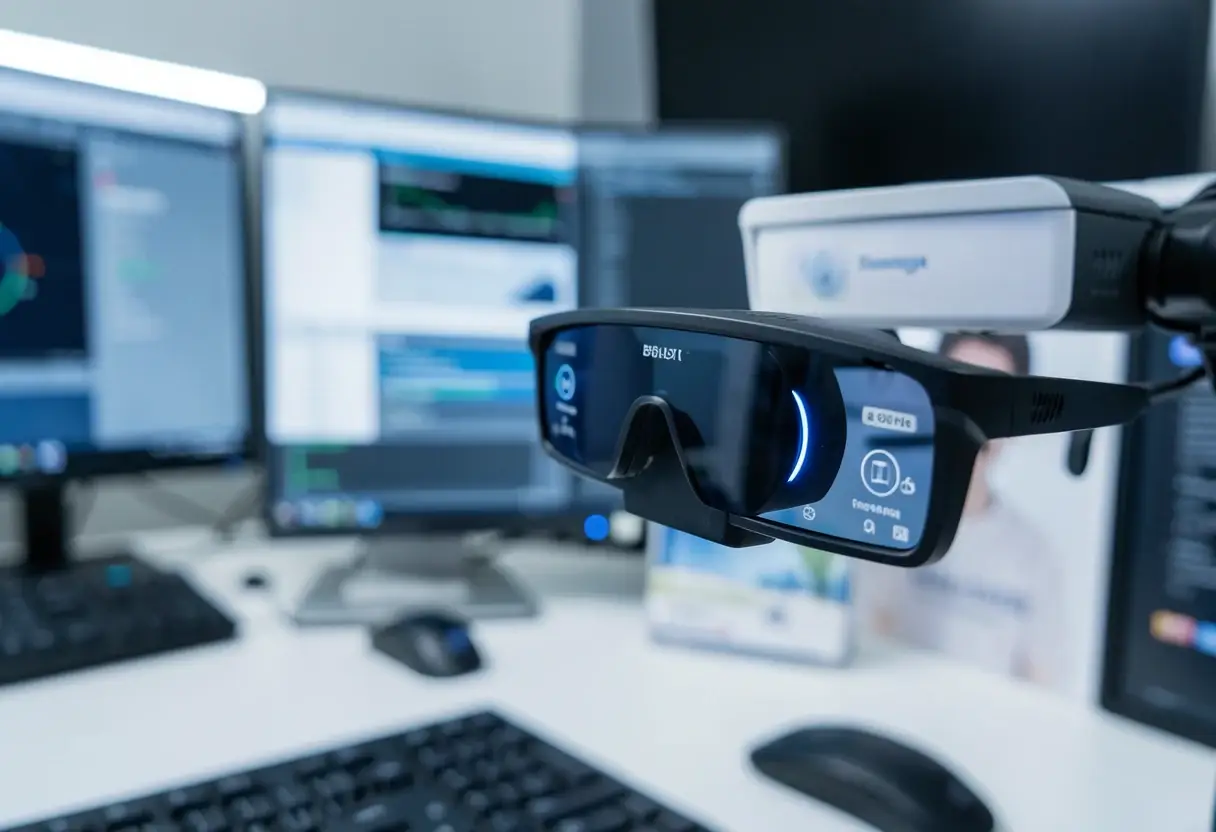
The post put a concrete design choice at the center of Meta’s smart-glasses privacy problem. Pixelated describes the race as heating up, with Meta and Samsung about to go head-to-head. On Meta glasses, the camera LED (the front light meant to show when recording) resembles the camera on the opposite side.
Why has Meta’s recording indicator become a liability?
Meta launched its own-branded smart glasses this summer, without Ray-Ban or Oakley branding. Pixelated said the products seemed to do well. Some models cost much less than Ray-Ban-branded pairs, while others carried Kylie Jenner or LISA names, adding a fashion angle to the line.
Pixelated noted that none of those model changes altered the front camera LED. The indicator therefore remains the same visual feature across cheaper, celebrity-named and fashion-led versions.
During the past two years, some people disabled that LED on Meta glasses, despite its recording warning. Social-media users dubbed the products “perv glasses.” Meta has issued several different software patches that disable the camera when the LED is tampered with.
Pixelated gives no version numbers, dates or effectiveness data for those patches. That omission leaves a practical caveat: software can block a known tampering route, but the source offers no evidence that patches have removed the stigma or the broader unease about camera-enabled eyewear.
The source says the abuse has created a wider sense that camera-equipped glasses are unsettling. Hardware still carries much of that reputational burden.
Meta has addressed tampering in software, but it has not yet changed the physical indicator that drives the privacy debate.
How do Samsung and Google’s glasses differ?
The Warby Parker and Gentle Monster glasses associated with Samsung and Google resemble Meta’s eyewear in overall form. They differ in one visible respect: their camera LED does not look like the camera on the opposite side.
That asymmetry (a visual mismatch between the indicator and the lens) could prompt people to ask about the glasses, Pixelated argues. Meta’s indicator resembles the opposite-side camera, and its design is purposefully stealthy because the two sides are symmetrical.
The source makes a narrow visual case. It does not claim that rival glasses collect less data, prevent more covert recordings or resist indicator tampering better. Their proposed advantage is legibility: observers can see that the device contains a camera.
In plain terms, the rivals announce their hardware visually; Meta’s symmetrical design does not.
Could a redesigned indicator repair Meta’s image?
The November 17 Gentle Monster cateye render appears to point toward a less stealthy approach. Pixelated suggests that Woodland may have been calling out its similarity to the Meta Starfire Kylie Jenner style, but the deleted post leaves his motive unknowable.
The issue predates the post. Pixelated covered Meta’s privacy concerns on episode 125 of the Pixelated podcast, and Woodland’s render reinforced the same design question. The original analysis says a similar redesign would help a lot, while inviting readers to weigh in.
Woodland’s post did not supply a launch date, price, availability plan or technical specification. Nor did it explain how a visible LED would interact with Meta’s software patches when someone covers it. A visual redesign could improve recognition without proving that Meta has solved the tampering problem.
The render is a credible design signal, not evidence of a commercial fix.
The next test is whether Meta turns the November 17 concept into a shipping product and whether a visibly distinct indicator changes user behavior. Until then, the “perv glasses” stigma remains attached to a design Meta has not publicly replaced.
via 9to5google.com (Source)
More from Amara Osei
Show full bio
News editor covering people, launches and day-to-day practice in marketing, advertising, marketing technology, media, SEO and search at Marketing Herald.
354 articles
More on the wire
- Ray-Ban Meta Audio Review: Smart Glasses at 44g, Priced Too High
- Google's Android XR Glasses Weigh 41 Grams and Bet on Privacy
- Samsung's Android XR Smart Glasses Reportedly Launch in December
- etisalat Brings Meta's AI Glasses to UAE Stores From AED 1,160
- Meta Courts TV Makers for CTV Expansion as Fubo Posts $51.8M Loss