MH-5976Retail Media & Commerce
Kohl's, J.C. Penney and Saks Face Make-or-Break Holiday
Kohl's, J.C. Penney and Saks enter the holiday quarter with falling sales, and analysts say only cash flow, not traffic, can save their turnarounds.
Wire notes
- Kohl's Q4 net sales fell 4% last year, with comps down nearly 3% and full-year net sales down 4% versus 2024.
- J.C. Penney's Q4 net sales tumbled 8% year on year, and fell another 8% in its most recent quarter.
- Saks exited Chapter 11 as Exemplar Luxury Group with debt under $1 billion and just 15 full-line stores.
- Kohl's named former Walmart fashion executive Ryan Waymire chief merchant as of last month.
- Sephora shop-in-shops at Kohl's posted sales declines for two straight quarters this year.
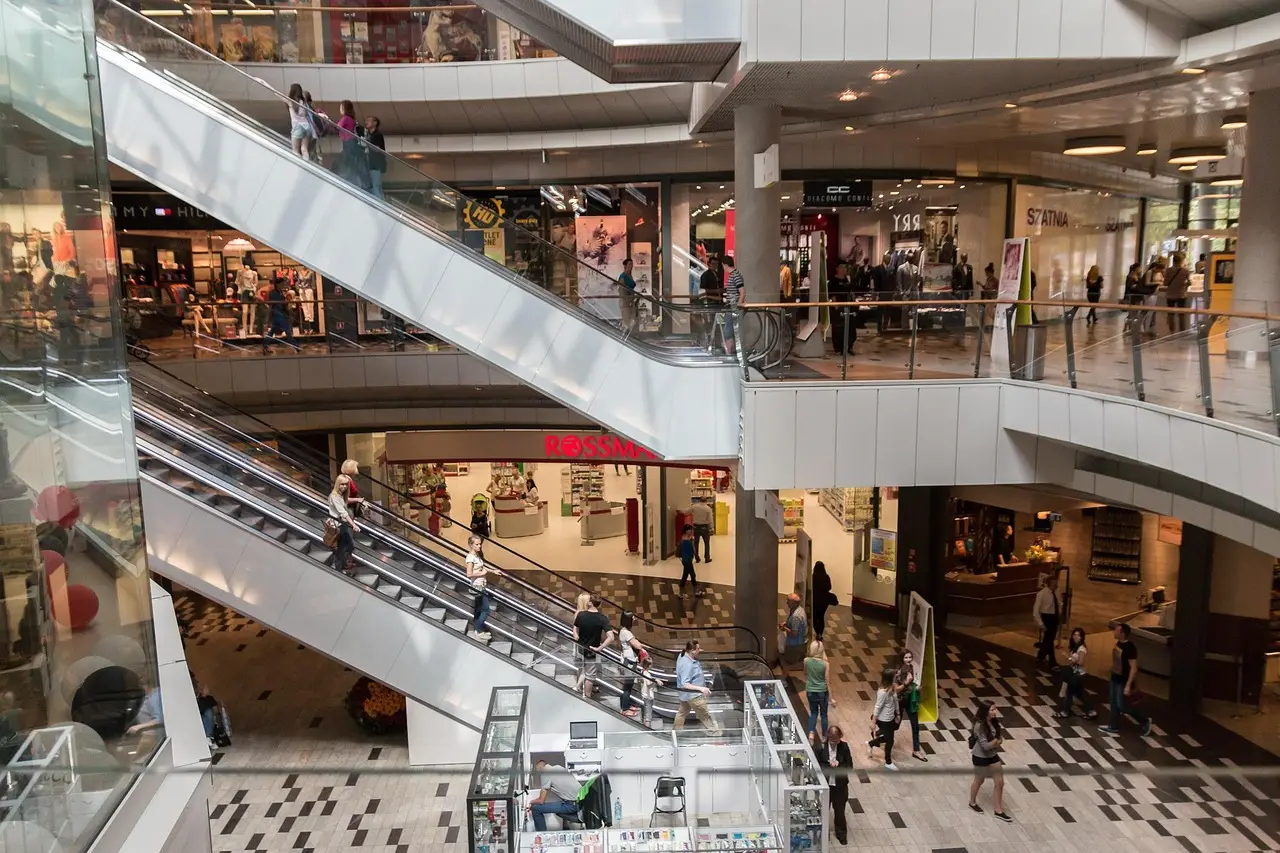
Kohl's, J.C. Penney and Saks Fifth Avenue all face a critical test this holiday season, according to analysts who say the trio must convert seasonal demand into profitable sales and cash flow — not just traffic.
The three retailers are being closely watched for signs of stabilization, said Glenn McMahon, partner at MAC Advisory and Consulting. And they're being watched from very different starting points.
"Kohl's, J.C. Penney and Saks are three very different bets, but each faces a critical test this holiday season," McMahon said by email. "The issue is not simply whether consumers will spend; it is whether these retailers can convert holiday demand into enough profitable sales and cash flow to address deeper business challenges."
Department stores traditionally lean into the holidays with decorations, window displays and events, and they're poised to be among the top destinations for browsing and purchasing this year, according to Simon-Kucher's 2026 Holiday Shopping Report. That makes the so-called "golden quarter" the biggest opportunity these three have to prove their turnarounds are working.
"People like department stores," Michael Appel, president of Appel Associates, said by phone. "The department store format, outside the United States, is working very well."
The contrast with healthier rivals is stark. Dillard's, credited by analysts with sticking to retail fundamentals, gained market share in its most recent quarter. Macy's under CEO Tony Spring has shown clear signs of a turnaround, Bloomingdale's has thrived, and Nordstrom — now private and free from reporting obligations — appears to be doing well too.
The bottom line: the format isn't broken everywhere, but these three names are carrying the most risk into the season.
How much trouble is Kohl's in?
Plenty. Kohl's Q4 net sales fell 4% last year, with comps down nearly 3%, contributing to full-year declines of 4% in net sales and over 3% in comps compared to 2024.
There's a cushion, though. The company continues to generate good cash flow and carries little debt, meaning it can afford to keep the turnaround going into next year, according to David Silverman, senior director at Fitch Ratings.
Kohl's also has a new chief merchant as of last month: Ryan Waymire, a former Walmart fashion executive with stints at Wayfair, FabFitFun, Amazon and Target. But the company suffered a setback this year when its Sephora shop-in-shops — long touted as a traffic and sales driver — posted sales declines for two straight quarters.
This holiday season, Kohl's comparable sales, traffic, markdowns and gross margins will all be under a microscope, McMahon said.
"Kohl's needs to give middle- and lower-income shoppers a compelling reason to choose its stores over off-price chains, mass merchants and online rivals," he said. "Another weak holiday would raise questions about how much longer Kohl's can pursue a turnaround without further restructuring."
The takeaway: Kohl's has the balance sheet to buy time, but not indefinitely.
Can J.C. Penney stop the bleeding?
J.C. Penney made some strides in 2025, then stalled in Q4. Net sales tumbled 8% compared to the 2024 holidays, and the declines continued into 2026. In its most recent quarter the retailer lost market share, with net sales down 8% year on year — though activewear and beauty were strengths.
Penney has unusual protection. It sits inside Catalyst Brands, a conglomerate that also includes many names owned by Authentic Brands Group. Co-owners Simon Property Group and GGP (formerly Brookfield) have an incentive to keep Penney stores open — not just for the revenue, but to prevent lease clauses that would let other mall tenants exit or renegotiate. Simon and Brookfield bought the retailer in 2020 during its bankruptcy.
"J.C. Penney's been on a downslide for a long time, but they're protected, because of the fact that they need them to be in those malls," Appel said. "They probably have to invest a lot more money in the stores. They're treading water in my opinion."
At some point Penney has to show improvement, Silverman said, because declines this large signal business model risk.
"Penney's holiday performance will test whether its combination of affordability, apparel, home and beauty can drive traffic and spending without excessive discounting," McMahon said. "The risk is that persistent weak sales and thin margins leave the retailer with too little financial flexibility to invest in its future."
The takeaway: Penney's mall landlords keep it alive, but landlords don't fix a business model.
What happened to Saks Fifth Avenue?
The most dramatic story of the three. After a tumultuous 2025 in which it struggled to pay vendors — leading to a dearth of merchandise during the critical holiday quarter — Saks Global landed in bankruptcy court early this year.
Months later, it exited Chapter 11 as "Exemplar Luxury Group," still running Saks Fifth Avenue, Neiman Marcus and Bergdorf Goodman, with its debt load trimmed to under $1 billion.
"Exemplar (Saks/Neiman Marcus) has the most to prove, following a year in which the company completed a bankruptcy process, changed management teams, and has implemented efforts to improve vendor relationships," Silverman said. "The industry will be focused on the company's inventory position and ability to re-engage with customers that have defected in recent years."
The Saks banner shrank the most in bankruptcy: its full-line footprint was cut in half, leaving just 15 full-line stores and almost zero off-price stores. Of the three Exemplar banners — and compared with Kohl's and J.C. Penney — Saks may be the most vulnerable.
Appel questioned whether the remaining stores are getting enough support, noting that holiday marketing this year centers on the Manhattan flagship.
"What about the other stores? If they're not supporting them equally — and we don't know the answer — then they're not going to perform well," he said. "And you know what's going to happen? They're going to close those stores, and it's all going to end up being Neiman Marcus. Because they don't have scale, and they're using the same buying team for both, which is completely ridiculous."
He pointed to the closure of Saks' Chicago store on Michigan Avenue, which for decades operated across the street from a Neiman Marcus, with both thriving.
"It's crazy not to have a major store on Michigan Avenue," Appel said. "They might think that by closing Saks, maybe they'll get a lot of customers going to Neiman's, but they're different customers. So I think that's baloney. They don't want to make the investment. They're not taking the long term view."
Exemplar faces a broader test too. Most high-end brands have struggled this year, and aspirational luxury shoppers seem to have fled. At Exemplar, luxury demand, full-price selling, inventory management, vendor relationships and cash generation will all be under scrutiny, according to McMahon. Appel expects Saks in particular to keep shedding market share, to the benefit of Nordstrom and Bloomingdale's.
"Strong holiday sales would help, but sales alone will not resolve the larger question: can Saks generate sufficient cash to support its financial obligations and make the combined business work?" McMahon said. "A weak season could intensify pressure on an already complicated turnaround."
For all three retailers, the quarter's real scoreboard won't be revenue — it'll be cash.
via Retail Dive (Source)
More from James Calloway
Show full bio
Market editor covering technology and product news in marketing, advertising, marketing technology, media, SEO and search at Marketing Herald.
181 articles
More on the wire
- Saks Bets on 'Main Character Energy' for Post-Bankruptcy Holidays
- Macy's Reimagines Santaland and Revives Holiday Square at Herald Square
- Adobe Forecasts U.S. Online Holiday Spend to Exceed $275 Billion
- Deloitte: 28% Expect Holiday Budgets Exhausted in October
- 28% of Holiday Budgets Will Be Spent by End of October