MH-4148Content Marketing
IMEX America 2026: How Podcast Studios Became Content Engines
The Freeman Company swapped frosted for clear glass by day two at IMEX America 2026. Strategists Courtney Stanley and Nancy Lugassy say goals, talent and distribution matter more than microphones.
Wire notes
- By day two at IMEX America 2026, The Freeman Company swapped frosted glass for clear glass in its first content studio.
- The MoneyPot at Money20/20 USA had two podcast booths with live content and audio streaming, plus a stage and networking bar.
- Vusion and Diebold Nixdorf added podcast studios to their NRF 2026 booths.
- A Pinnacle pharmaceutical client invited medical professionals, brand employees and patient testimonials.
- Seagate Technology recorded The Data Movement at NAB 2026 and invited leaders from Adobe and Blink.
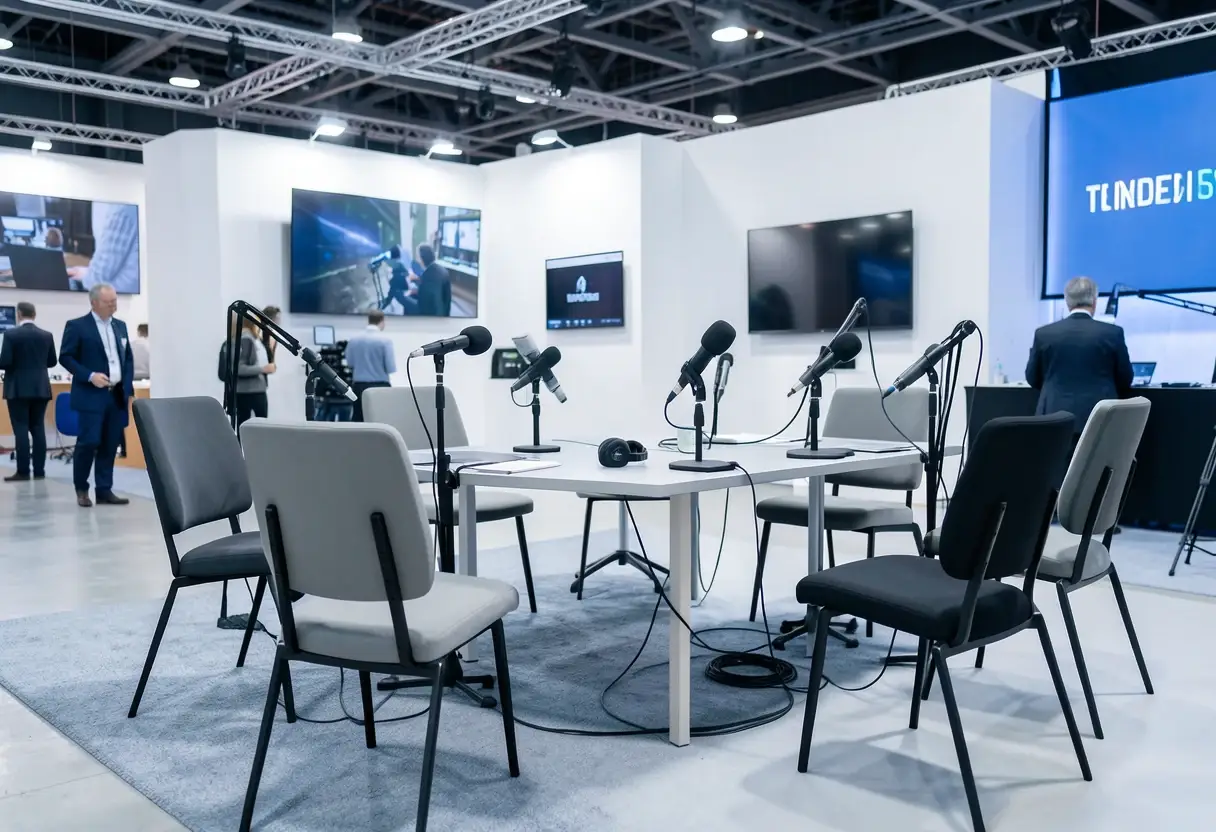
By day two at IMEX America 2026, The Freeman Company had replaced the frosted glass around its first content studio—a booth built to record interviews and social media content—with clear glass, shifting its conversations into new formats and turning content creation into part of the show-floor experience.
The Freeman Company said the frosted glass had blocked attendees’ view on day one, reducing natural curiosity and the energy the podcasting activation brought to the show floor.
The project began with an aim of producing a steady stream of interviews and social media content for The Freeman Company and its family of brands, the company said.
Kara Barry, senior vice president marketing at The Freeman Company (TFC) Brands, said: “The coolest part has been the impromptu drop-in moments that you just can’t plan for.”
Event Marketer described a growing number of exhibitors and show organizers using podcast activations (scheduled brand experiences) to turn booth space into a platform for conversations, shareable content, engagement and sponsorship value.
At Money20/20 USA, the MoneyPot included two podcast booths with live content and audio streaming, plus a dedicated stage and networking bar. At NRF 2026, Vusion and Diebold Nixdorf incorporated podcast studios into their booths to share real-time insights on retail and the show at large.
What makes a podcast booth more than a microphone?
“The biggest misconception exhibitors have is that a podcast activation is simply setting up a microphone, putting two chairs in a booth, and recording a conversation,” said Courtney Stanley, an event host, producer and podcast personality who has worked with brands on conversations in varied settings.
Stanley said: “The real opportunity is much bigger: a podcast can become an engagement strategy, a content engine, and a relationship-building tool all at once.”
Nancy Lugassy, experiential strategy director at Pinnacle, starts every podcast-activation discussion with clear goals and success metrics that guide strategy and execution. Her brief asks whether content will stream live or be captured for later, how it will be distributed and how the activation fits the broader engagement strategy.
“Our goal is to maximize the value of the entire brand experience, and that goes way beyond the build,” Lugassy said.
Neither Stanley nor Lugassy disclosed audience, conversion or build-cost figures, so the activation’s commercial return remains unproven in the account.
Takeaway: A microphone produces content; a measured strategy gives that content a job.
Which setup fits live and edited content?
Lugassy said a studio designed for livestreaming may require a fully enclosed, acoustically controlled, air-conditioned space. For interviews captured for editing and distribution later, she said, a more open configuration can invite visibility and interaction with the show floor.
Lugassy also emphasized placement: a back-corner studio may offer privacy, while a high-traffic aisle can make recording a destination that attendees can enter and experience. Event Marketer’s examples include content studios built as a sauna, a diner booth and a shipping container, without identifying the brands behind them.
Takeaway: The design choice is not cosmetic; broadcast control and booth visibility pull in opposite directions.
Who should brands invite on air?
At IMEX, TFC used the studio for future content, interviewing influencers, speakers, its own panelists, leaders from TFC brands and attendees for spontaneous moments of connection.
Pinnacle recently worked with a pharmaceutical brand that invited three groups: medical professionals, the brand’s employees and patient testimonials. Seagate Technology recorded new episodes of its podcast, The Data Movement, at its NAB 2026 booth and invited leaders from Adobe, Blink and other brands to unpack technology issues.
Stanley’s advice was direct:
“Don’t make a podcast about your product. Make it about the people and ideas shaping your industry. The best conversations aren’t sales pitches disguised as interviews. They’re authentic, interesting discussions that give your audience a reason to stop, listen, engage, and share.
Bring in customers, industry leaders, partners, and thought leaders. Let their perspectives and expertise take center stage. Your brand benefits from being the platform that brings those voices together.”
The Freeman Company, Stanley and Lugassy disclosed no attendance, download or sentiment figures, leaving audience quality open to verification.
Takeaway: The practical rule is to put credible outside voices ahead of product spokespeople.
What should happen when the microphones go quiet?
Lugassy recommends using downtime for dynamic programming, such as a celebrity appearance, a special demo or another experience tied to the brand. “The goal is to get maximum value from the space while continuing to draw attendees in and drive engagement on the show floor,” she said.
She said the investment case works when immediate engagement and content-creation benefits match long-term value. Stanley offered the sharper test:
“Ultimately, I think exhibitors should stop asking, ‘How can we have a podcast at our booth?’ and start asking, ‘What conversations can we create that people will want to be part of, remember, and share long after the show ends?’ That’s where the real return on a podcast activation lives.”
No build costs, sponsorship income or long-term content performance figures appeared for The Freeman Company or the quoted strategists, leaving the claimed return open to verification.
Takeaway: At the next trade show, exhibitors should report audience reach, content reuse and return on investment, not merely the number of conversations recorded.
via eventmarketer.com (Source)
More from Amara Osei
Show full bio
News editor covering people, launches and day-to-day practice in marketing, advertising, marketing technology, media, SEO and search at Marketing Herald.
320 articles
More on the wire
- iHeart Podcasters Share 5 Lessons for Building an Enduring Franchise
- SiriusXM's $160 Million Giggly Squad Deal Redraws Podcast Strategy
- Ad Tech's ARI Gave Converse's Pulled Ad an F. ChatGPT Gave It a B Minus
- Ogilvy, CAA build AI ad pipeline for celebrity likenesses
- Live Selling Took Over the Show Floor at NYCC 2026