Youth Protest Wave Meets Government Push to Ban Under-16 Social Media
Student protests from France to India are organized on Snapchat and TikTok just as governments push under-15 and under-16 social media bans that could cut minors off from political power.
Wire notes
- France's top court ruled the under-15 social media ban unconstitutional, citing disproportionate infringement of free expression.
- France, Australia, the UK, Malaysia and Greece have pursued or adopted social media bans for under-15 or under-16 users.
- India's youth protest movement over the exam system forced the education minister's resignation.
- The current surge is the largest wave of youth protest since 1968.
- French protests began as students coordinated on Snapchat over schools with no teachers and no water.
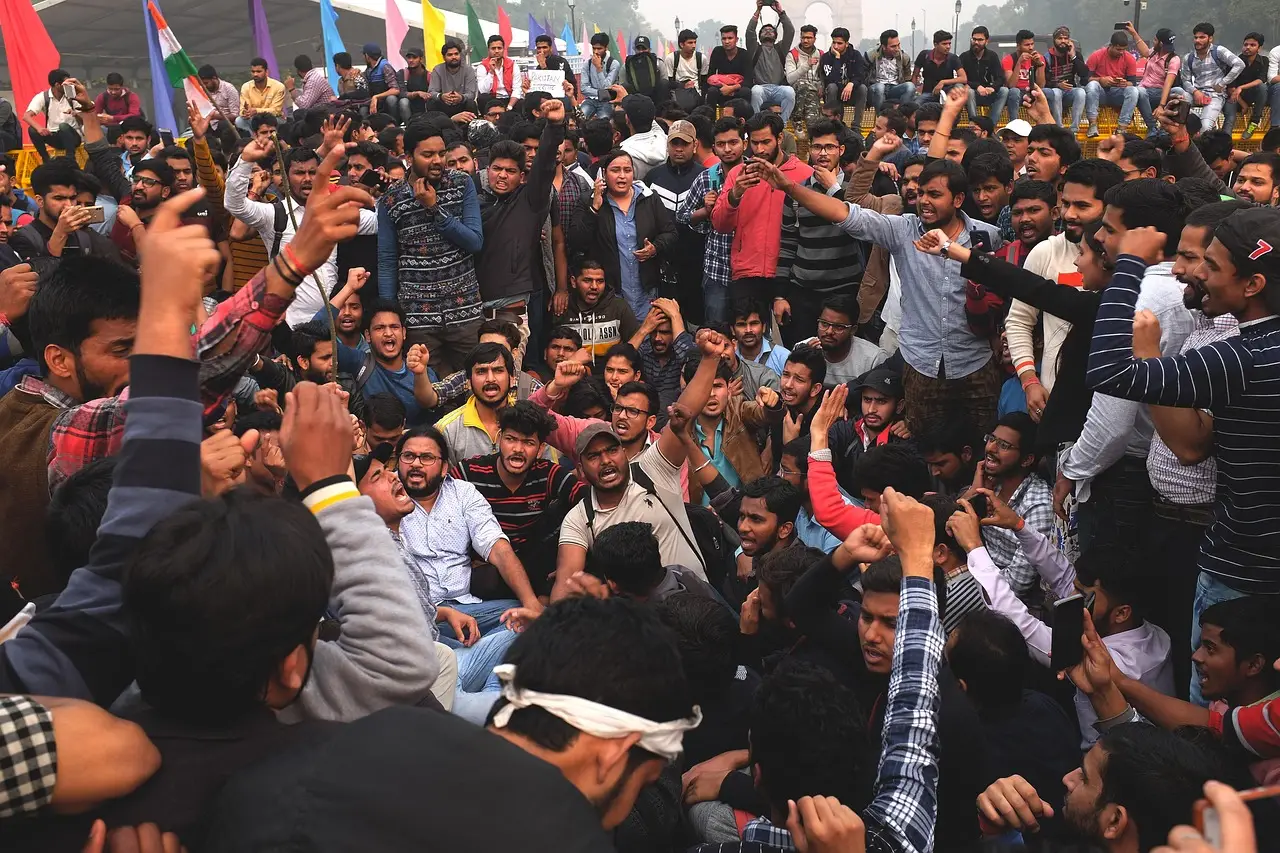
Hundreds of thousands of people have joined student-led protests across France, and several governments now want to cut the protesters off from the platforms that organized them. Writing at Tech Policy Press, Tess Vartanian and Aliya Bhatia argue that age-based social media bans would strip young people of their most effective political tool.
The French movement began at one school in the Paris suburbs, where students exchanged messages on Snapchat complaining that their schools had no teachers and no water, then swapped plans on where and when to meet. It grew into a nationwide movement against education spending cuts and the rising cost of living.
France is not an isolated case. Youth-led protests have spread across Europe, Asia and Latin America:
- In Chile, Greece and Italy, thousands of students marched against cuts to education funding.
- In India, anger over the examination system mobilized thousands of students across dozens of demonstrations, with enough political force to force the education minister's resignation.
The authors call this the largest surge in youth protest since 1968, when student movements erupted in Paris, Prague and the United States. Today's protesters, they note, have something their 1968 predecessors lacked: social media.
Why does social media matter so much for minors?
The mechanism is structural. Minors cannot vote and cannot run for office. They generally have less money, less mobility and less access to elected officials than adults. For some, online participation is the only realistic option: many need parental permission to attend protests, or live where public transport is unavailable or unsafe, particularly young girls.
Young people use Instagram, TikTok and X to discuss social issues, criticize government policy, circulate petitions, share firsthand accounts and find others who share their causes. A teenager with a phone can publish a video, organize demonstrations and help a political message reach millions, the authors write.
International human rights law recognizes that children under 18 do not lose their rights to expression, assembly and association. The UN Convention on the Rights of the Child states that those rights extend online. France's own constitution protects the expressive rights of all people, including children.
Which countries are banning social media for minors?
Despite that legal backdrop, democratic governments are adopting or considering age restrictions. France, Australia, the United Kingdom, Malaysia and Greece have pursued or adopted bans for children under 16 or 15. Several US states have sought similar measures. India and Chile have also expressed interest in restricting children's access to online services.
Not all bans survive court scrutiny. Over the summer, France's high court ruled that the country's attempt to block social media for children under 15 was unconstitutional, finding that it disproportionately infringed their freedom of expression and communication.
Are bans protecting children or silencing them?
The authors concede the underlying concerns are real: young people can face sexual exploitation, privacy violations and negative mental health effects online, and governments have a legitimate interest in reducing those harms. But they argue that cutting an entire age group off from major communications platforms is not a narrowly tailored safety measure. It is, they write, a substantial burden on young people's political participation, enacted at a moment of monumental political change.
The current demonstrations show how bans can serve as instruments of control rather than protection, the authors argue. In France, officials have held emergency meetings to influence platforms directly, renewed calls to block minors from social media to break up the protests, and considered a "social media blackout" to disrupt demonstrations.
The pattern extends beyond France. Indian authorities are cutting internet services, ordering mass takedowns of posts criticizing the government, and considering age-based social media restrictions.
In 1968, governments answered protest with military invasions, police brutality and mass arrests. As today's protests meet state-backed force in Paris, Delhi and Santiago, social media bans may look mild by comparison. The authors contend the political consequences can run deeper: by cutting young people off from the networks they use to find one another and organize, a government can stop a movement before it reaches the streets. Suppressing one generation's political rights, they conclude, erodes the fundamental rights of all.
via digitalinformationworld.com (Source)
More from Elena Vasquez
Show full bio
Senior reporter covering technology and product news in marketing, advertising, marketing technology, media, SEO and search at Marketing Herald.
383 articles
More on the wire
- Meta Rolls Out AI Teen Detection on Instagram Worldwide
- Sextortion Reports Rise 40% as Platform Safety Tools Fail Tests
- Fan Armies Turn Digital Craft Into Political Muscle Worldwide
- Enem Essay Topic on Brazil's SUS Drives 6 Million Social Interactions
- Paraguay's Crisis Drove 384% Surge in Brazilian Social Media Buzz