Walmart U.S. online sales up 23% with 96% of households within 3 hours
Walmart U.S. online sales rose 23% in Q3 as 96% of households became reachable within three hours. Revenue hit $188.8 billion and full-year guidance climbed to 4.9%-5.2% growth.
Wire notes
- Walmart U.S. online sales grew 23% year over year in the third quarter.
- 96% of U.S. households can be reached in three hours or less, Walmart U.S. CEO Dave Guggina said.
- Q3 revenue rose 5.2% to $188.8 billion; full-year net sales guidance lifted to 4.9%-5.2% from 4%-5%.
- Over 80% of U.S. e-commerce orders are fulfilled from stores, including marketplace orders, executives said.
- CFO John David Rainey said U.S. e-commerce is "pretty close to break-even" when advertising is excluded.
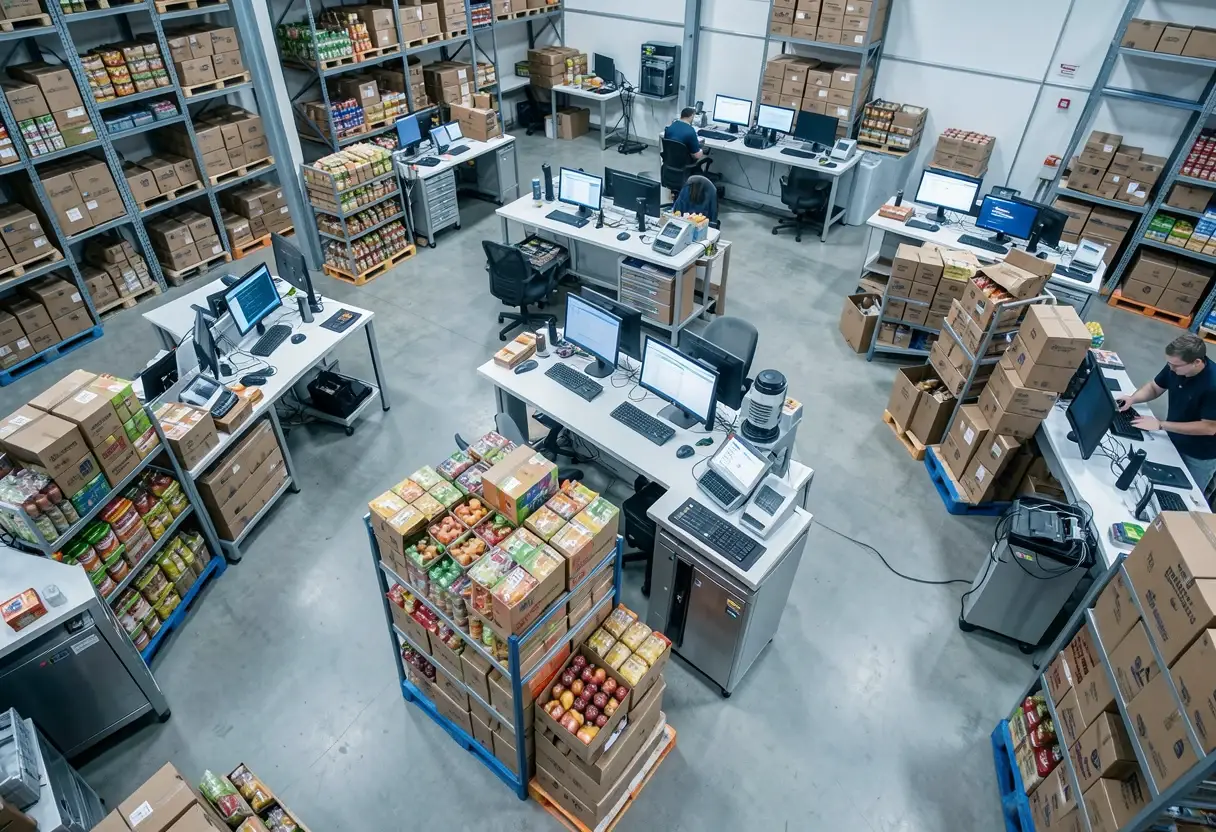
Walmart U.S. online sales grew 23% year over year in the third quarter, and the retailer says 96% of U.S. households can now be reached in three hours or less. Dave Guggina, Walmart U.S. president and CEO, tied the two figures together on Thursday's earnings call, calling fulfillment speed "becoming increasingly important" and a competitive advantage.
The quarter's headline numbers ran broader. Total revenue grew 5.2% to $188.8 billion, per Walmart's press release, and full-year net sales guidance moved up to 4.9%-5.2% growth from a prior range of 4%-5%.
What is driving the 23% online growth?
Store-based fulfillment — picking and shipping orders from a store rather than a dedicated distribution center — does most of the work. Executives said on the call that over 80% of U.S. e-commerce orders are fulfilled from stores, a figure that includes orders placed through Walmart's online marketplace (third-party sellers' goods sold on Walmart's site).
- Over 80% of U.S. e-commerce orders fulfilled from stores, including marketplace orders, executives said on the call.
- 96% of U.S. households reachable in three hours or less, Guggina said.
- 23% year-over-year growth in Walmart U.S. online sales, the company reported.
The 80% figure does not separate Walmart's own inventory from marketplace goods, which flatters the in-store fulfillment story. The 96% coverage claim also says nothing about average delivery time or what it costs to hit those windows; the call disclosed neither.
Takeaway: Walmart's online growth is a store-network story, and the company has not said what that speed costs.
Is the e-commerce business actually profitable?
Close, on the company's own account, but not clearly profitable. Walmart CFO John David Rainey told analysts the U.S. e-commerce operation is "pretty close to break-even" when advertising is excluded. The qualifier carries weight: advertising revenue sits outside that calculation, and no advertising figure was disclosed on the call. Break-even (covering the cost of running the business) is also not the same as profit.
Takeaway: The online business roughly covers its own costs; the margin case still rests on advertising and product mix.
What has the new membership deal delivered?
Walmart says the combined Walmart+ and Sam's Club Plus offer, which debuted in October, is seeing early success. At Sam's Club, the company has "seen already a couple million new members come in," CEO John Furner said on the call.
The caveat: "a couple million" is imprecise, the company did not split that figure between Sam's Club and Walmart+, and no pricing or revenue-per-member detail came with it. Walmart also did not say how many of those members would have joined without the bundle.
Takeaway: Early membership traction is clearest at the club business, where the supply chain was already Walmart's own.
How much confidence does the quarter earn?
Furner described the shopper as "stable and resilient despite some pressures, particularly in the first part of the year," when asked about consumer health. Jefferies analysts wrote in an emailed note Thursday that "[Walmart] is gaining share, margins remain healthy, and the company is leaning further into value while higher-margin businesses scale." The analysts added: "We believe continued share gains and solid holiday execution should support further earnings upside over time."
That is an opinion, not guidance, and it rests on holiday execution — a forecast by definition — while the raised 4.9%-5.2% range already sits on the table.
Takeaway: Sell-side confidence rests on share gains and the holiday quarter, not on evidence past the reported quarter.
Where do analysts push back?
Neil Saunders, managing director at GlobalData, pushed in the other direction. "On e-commerce, as has been the case in a few previous quarters, e-commerce in the U.S. is driving all the comp numbers" (comparable-store sales growth), he wrote in a statement, "This is because it's the main arena in which Walmart is winning new customers — especially higher-income ones."
Saunders conceded the trade-off himself. "There's probably a need for more balance, especially given the investment being made in stores, but given the extremely integrated nature of the operation, which relies on stores, this doesn't matter all that much in the short term."
Takeaway: The main critique is overinvestment in stores; the analyst's own view is that the integrated model absorbs it in the short term.
What the call did not settle
- Dynamic pricing (prices adjusted automatically to demand and rival moves) stayed in public debate around Walmart. The reported remarks quantify none of it: no price data, no margin bridge.
- Advertising sat outside the e-commerce breakeven math, and no advertising revenue figure was given.
- The material reviewed for this article names the third quarter and a Thursday earnings call, but not calendar dates.
The next quarter turns on three things Walmart has now put in public play: whether store-based fulfillment can keep hitting three-hour windows as membership volume grows, whether advertising revenue closes the gap between a near-break-even online business and a profitable one, and whether the 4.9%-5.2% full-year range survives the holiday quarter Jefferies is underwriting.
via Retail Dive (Source)
More from Amara Osei
Show full bio
News editor covering people, launches and day-to-day practice in marketing, advertising, marketing technology, media, SEO and search at Marketing Herald.
362 articles
More on the wire
- Walmart lifts sales outlook to 4.9%-5.2% on higher-income demand
- Walmart's global ad growth slows to 25%; U.S. ads rise 37%
- Walmart+ Posts Record First-Half Membership Growth in Year Six
- Amazon: 400 Million Customers Used Alexa for Shopping in a Year
- Walmart's Sparky Lifts AOV 40% as CEO Teases Vizio TV Play