MH-8277Advertising & Media
Trade Desk CEO: Big Brands Stopped Building Brands and It Shows
Trade Desk CEO Jeff Green says AT&T, Nike, Coca-Cola and most classic Americana brands have lagged US GDP growth because they stopped brand-building. Google, Twitch and ChatGPT are rebuilding the ad stack.
Wire notes
- Trade Desk CEO Jeff Green says AT&T, Nike, Coca-Cola, Pepsi, McDonald's and most classic Americana brands have lagged US GDP growth in recent years.
- Google's Q3 earnings caused its stock to tank after it admitted showing fewer ads in AI search than in traditional search.
- Twitch product chief Mike Minton said "We're not trying to be TwitchTok" at TwitchCon 2026 in San Diego.
- Roughly 60 SpaceX employees who worked on Grok Imagine were laid off this week.
- A $1.7 billion Google antitrust fine called off in 2019 may be reinstated after a higher court ruling.
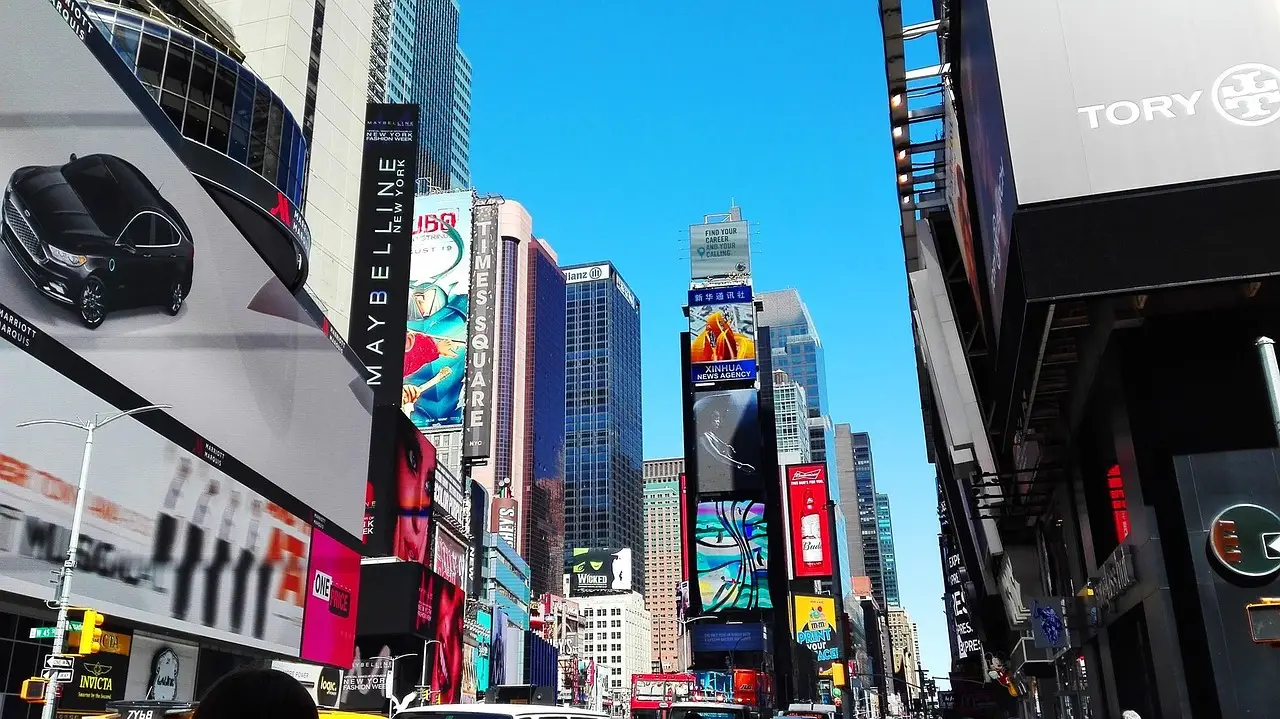
AT&T, Gap, Nike, Coca-Cola, Pepsi, McDonald's, Verizon and most other classic Americana brands have lagged behind US GDP growth in recent years, according to Trade Desk Co-Founder and CEO Jeff Green. Only the very largest companies in their categories — Walmart among them — have beaten GDP growth, and even Target is not hitting the mark, Green writes in a column for The Current, TTD's news and content marketing site.
Green's diagnosis is internal, not external. The brands are "not growing in part because they don't brand-build like they once did," he writes. His list of laggards also includes General Mills, Clorox, Best Buy, Macy's, Campbell's, Procter & Gamble, Kroger, Ford and Johnson & Johnson.
What happened to the brand economy?
Some oxygen has been sucked out of the brand economy by the growth of Meta, Google, Amazon and Microsoft. But Green's analysis does not dwell on forces outside marketers' control. His prescription is that marketers rediscover a lost art, which he describes as "using memory structures created through experiences (usually ads) that make people feel something."
The stagnation extends beyond consumer goods. American media brands show the same pattern. Studio empires have crumbled or confederated, and even a standout like Disney remains flat. The New York Times persists, but once-legendary news and magazine businesses are barely getting by.
How many ads can a chatbot serve?
Google's Q3 earnings caused its stock to tank after the company admitted it is showing fewer ads in AI search than it did in traditional search. But the company's gambit is laying the groundwork for what Eric Seufert at Mobile Dev Memo calls "an engagement sink" in which Google's Gemini chatbot and AI Overviews can "serve an ad each time the user submits a follow-up question."
That plan carries a hard mathematical problem. Google must calculate how often to show ads without causing the user to bounce, Seufert points out. Using each subsequent user input as data for refining ad targeting makes sense. Blasting the user with ads on every input does not. The experience then becomes no better than 50-page chumbox slideshows (low-quality pages that refresh ads each time a reader clicks "Next") that refresh their ads every time you press the button.
Seufert takes a crack at formulating an equation for when the diminishing returns from sharper ad targeting get offset by the rising likelihood of the user bouncing. It is dense material that could make a hardened ad tech engineer's eyes glaze over. It is also exactly the kind of math problem AI is supposedly equipped to tackle.
The irony is sharp: Google now occupies the same position as cash-strapped publishers, trying to work out how many ads it can cram into an interaction before the user runs.
Is Twitch becoming TikTok?
Twitch is opening up to short-form videos created outside the platform, plus new paid media opportunities to turn those clips into a discovery vehicle on Twitch itself. Twitch product chief Mike Minton addressed the obvious comparison on stage at the TwitchCon 2026 event in San Diego. "We're not trying to be TwitchTok," he said, as Digiday reports.
Twitch's position is unusual. The livestreamed video-gaming platform was early to the clipping trend. It has long offered a "Clips" tab that lets content creators clip and edit their own streams. Creators cut hourslong livestreams into short-form videos that routinely blew up on TikTok, YouTube and Instagram. Minton conceded Twitch had "missed an opportunity" to make the clipping phenomenon a thing on Twitch itself.
Whether Twitch viewers will watch viral TikTok posts, even from their favorite streamers, remains an open question. But there are other benefits for the platform. "It sounds like they're trying to capture more inventory as leverage from an advertising perspective," says Justin Miclat, chief growth officer at talent and brand management company Click Media.
What else moved this week?
- ChatGPT launched a wallet feature that allows users to make purchases with an AI agent, according to the WSJ.
- AI is turning ad tech into a fight for "the brain behind the buy," Digiday reports.
- Roughly 60 SpaceX employees who worked on Grok Imagine, the company's AI video and image generation tool, were laid off this week, per The Information.
- A $1.7 billion fine against Google for anticompetitive search advertising practices, called off in 2019, might be tacked back onto Google's bill after a higher court ruling, Reuters reports.
- A Google Ads update makes it easier for advertisers to provide detailed technical requirements for incrementality studies (tests measuring the sales lift ads actually cause), according to Search Engine Roundtable.
- Adobe released a new tool for personalizing advertiser landing pages, Marketing Brew reports.
The common thread across the week: attention is consolidating into fewer, AI-mediated interfaces, and the brands that stopped making people feel something are the ones paying for it.
via thecurrent.com (Original)
More from Elena Vasquez
Show full bio
Senior reporter covering technology and product news in marketing, advertising, marketing technology, media, SEO and search at Marketing Herald.
322 articles
More on the wire
- Three CMOs Show How Brand Moves Revenue — With Numbers to Prove It
- Owned-Channel Focus Slips Ahead of 2026 Holiday Season
- Gen Alpha Controls $100 Billion in Spending — and Rejects AI Ads
- PepsiCo CEO Champions Publicis Switch as 'An Important Capability'
- Amazon and Walmart Take 85.5% of US Retail Media Spend