MH-8559MarTech & AI
Google adds 66 regional Gemini voices across Android and iOS
Google is adding 66 regional voices to Gemini on Android and iOS, including more than 10 U.K. options. Google says they track local rhythm, but the app does not label regions.
Wire notes
- Google is rolling out 66 new regional voices today across Android and iOS after a Google I/O preview.
- The U.K. lineup includes more than 10 English options, with Geordie, Scouse, Brummie, Scottish, Welsh, Northern Irish, Modern RP and MLE among the named voices.
- The wider rollout covers U.S. English, U.K. English, Indian English, Hindi, Brazilian Portuguese, Indonesian and Korean.
- A chosen voice applies across Gemini Live and standard text-to-speech playback through the “Listen” control.
- Google says the app does not label voices by city or region, and Gemini is not programmed to identify its active accent when asked directly.
By Amara Osei
Google is rolling out 66 new regional voices in the Gemini app today on Android and iOS, following a preview at Google I/O.
What is changing in Gemini?
Google says the expansion provides tailored voice options across U.S. English, U.K. English, Indian English, Hindi, Brazilian Portuguese, Indonesian and Korean. The released details do not include a complete voice-by-voice breakdown for every language.
For U.K. users, Google says the update brings more than 10 distinct English voice options. The named lineup includes Geordie, Scouse, Brummie, Scottish, Welsh, Northern Irish, Modern RP and Multicultural London English (MLE). The announcement names eight examples against a total of more than 10, so the full U.K. selection extends beyond those labels.
Takeaway: The U.K. has the clearest range of named accents, while the other language categories receive less detail.
Can the update solve Gemini’s accent blending?
Gemini Live is Google’s voice-conversation mode. The concern is an issue seen in that mode: English accents can morph into a hybrid of Australian or American voices. I have not tested whether the new voices remove that behavior, so the suggestion that the update might help remains unverified.
For people who use a regional English accent, broader representation is welcome. That preference addresses access to a familiar sound, not evidence of better technical performance. The possible improvement remains plausible but untested.
Takeaway: Broader accent choice is a meaningful product change, but reduced accent blending remains an open question.
How does Google describe the voices?
Google says the voices are “tuned for natural pronunciation, pitch, and everyday local rhythm rather than exaggerated stereotypes.” The company says cadence takes priority over slang, so Gemini can sound local without filling text responses with forced street slang.
Once users select a voice, it carries across the entire app. It applies to Gemini Live conversations and to standard text-to-speech, meaning written chat responses played as audio, when a user taps the “Listen” icon. That makes regional voice choice an app-wide setting rather than a Live-only option.
Takeaway: The practical promise is one regional voice across live conversations and spoken text responses.
How do users access and identify them?
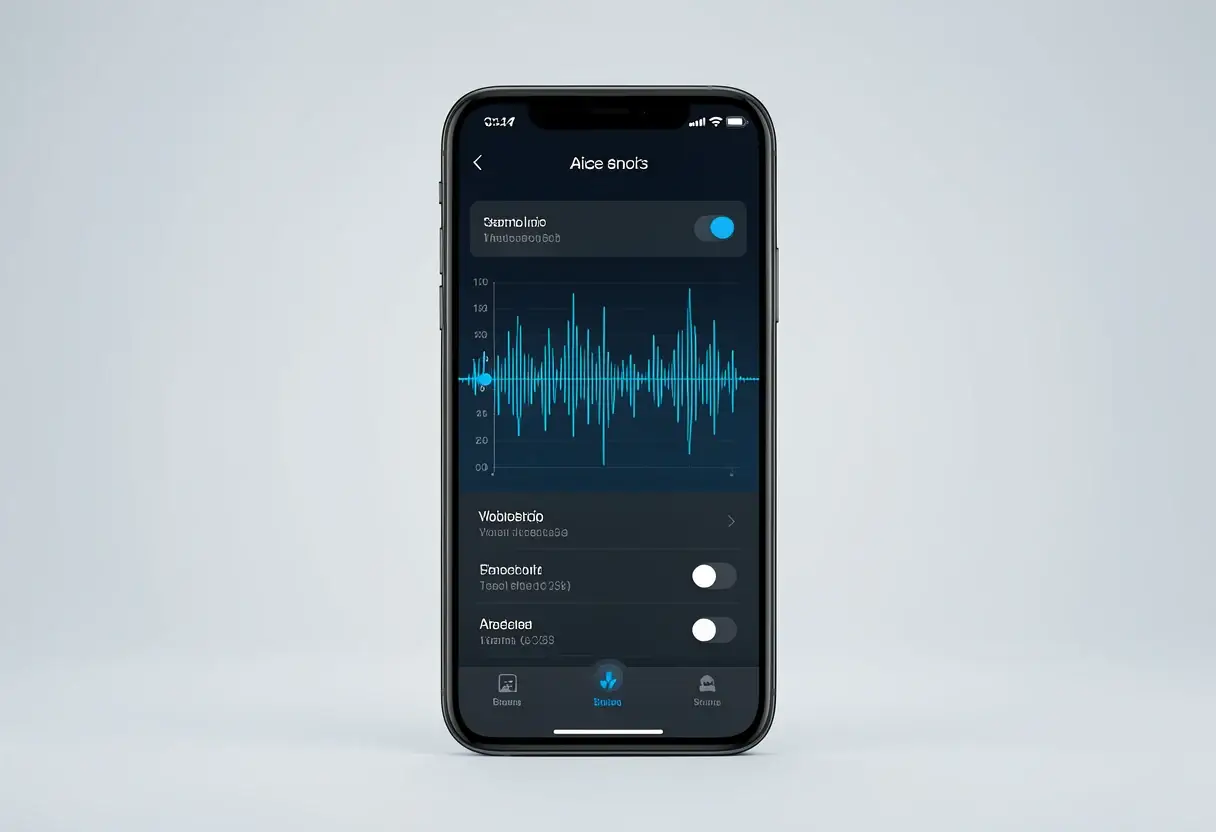
Google’s instructions say users can preview and select the new options today by tapping the three-dot menu inside Gemini Live. They can also open Gemini app settings and choose “Gemini’s voice.” The app menu does not explicitly label the voices by city or region.
Gemini is also not programmed to identify which accent it uses when asked directly, Google says. Those constraints make it harder for users to verify whether a voice matches their intended regional option. More choice does not remove that identification gap.
Takeaway: Access is simple, but weak labeling and limited self-identification make accent selection less straightforward.
What can local prompts reveal?
Google says prompts rooted in food, culture or sport will naturally bring out the warmth and rhythm of the new dialects. The announcement cites asking “the best pub in Sheffield for a Sunday roast” and seeking ingredients for a traditional Scouse stew as examples likely to prompt a local register.
I would also test asking where to get the best pattie and chips in Hull or the best pint in Leeds. My personal suggestions are Turnip & Thyme on Eccleshall Road in Sheffield for the Sunday roast and Whitelocks in Leeds for the pint. Those suggestions come from me, not Google, and they provide no controlled test of regional voice quality.
Takeaway: Local prompts offer an informal demonstration of the voices, not a transparent measure of accent accuracy.
Which related Gemini changes matter?
Outside the voice release, Google’s related Gemini developments include:
- Users can now set up Gemini’s Google Wallet integration for “personal finance insights.”
- Google announced Gemini 4 Hydrogen with “significant leaps” in speed and intelligence.
- The “Hey Gemini” hotword, meaning a spoken activation phrase, has debuted on Android XR glasses.
The available details do not specify rollout schedules, eligible markets or feature depth for these three items. They extend Google’s Gemini agenda but do not form part of the 66-voice launch.
Takeaway: The voice expansion is the documented launch; the three related items remain briefly specified side developments.
The next test is practical: whether Gemini can identify the selected accent on request and whether regional English still blends into Australian or American patterns in live conversations.
via 9to5google.com (Source)
More from Amara Osei
Show full bio
News editor covering people, launches and day-to-day practice in marketing, advertising, marketing technology, media, SEO and search at Marketing Herald.
320 articles
More on the wire
- Google Brings Gemini Live to CarPlay in Global Rollout
- Spotify Adds Nine AI DJ Voices and a Setting to Silence the Chatter
- Google Brings Gemini to Apple CarPlay as Android Auto Cuts Off Older Phones
- Google Adds UTM Parameters to Gemini Links for Referral Tracking
- ChatGPT Ads CTR Tops 1% in Four Markets — But Not in the U.S.