MH-5205Advertising & Media
British Airways Parent IAG Launches IAG Media to Sell Ads Across Five Airlines
IAG is launching IAG Media, a unified advertising business spanning British Airways, Aer Lingus, Iberia, Level and Vueling, targeting an audience of roughly 122 million passengers a year.
Wire notes
- IAG served about 122 million passengers in 2025 across its five airlines
- IAG Media unifies advertising sales for British Airways, Aer Lingus, Iberia, Level and Vueling for the first time
- IAG plans to equip 50% of its long-haul fleet with Starlink by the end of 2026
- Josh Peckham is chief commercial officer of the new IAG Media business
- The group intends to personalize ads based on travelers' destinations and profiles
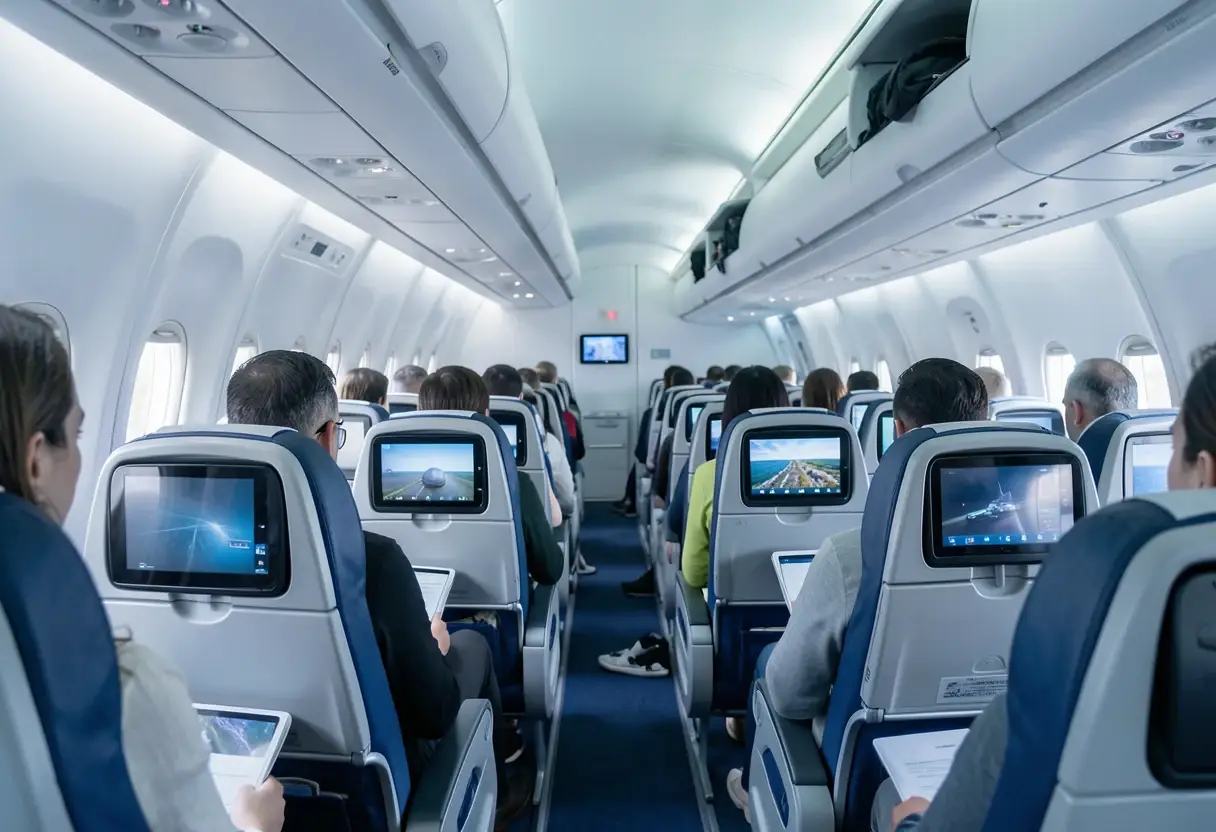
International Airlines Group, the parent company of British Airways, is launching a dedicated advertising business called IAG Media that will sell audience targeting across its five airlines for the first time.
The group served about 122 million passengers in 2025. That figure now forms the base of a single advertising proposition spanning British Airways, Aer Lingus, Iberia, Level and Vueling — the first time the carriers will offer advertisers one combined audience rather than five separate ones.
Josh Peckham, chief commercial officer of IAG Media, laid out the ambition in a statement to ADWEEK. "We want to create one unified story of how IAG airlines are enhancing the passenger experience and our advertiser experience," Peckham said.
What changes for advertisers?
IAG Media becomes the single point of contact for advertisers across all five airlines. Until now, each carrier has run its own separate advertising strategy, meaning brands had to negotiate and plan campaigns airline by airline.
The consolidation covers the full portfolio:
- British Airways, the group's flagship carrier
- Aer Lingus
- Iberia
- Level
- Vueling
For media buyers, the practical shift is straightforward. One commercial relationship replaces five. One audience pool of roughly 122 million annual passengers replaces fragmented, carrier-by-carrier inventory.
How does connectivity feed the plan?
Infrastructure is part of the pitch. IAG plans to equip 50% of its long-haul fleet with Starlink satellite Wi-Fi by the end of 2026, according to the announcement.
That deployment matters for the advertising business because connected aircraft open new placement opportunities in-flight, where passengers have historically been a hard-to-reach audience in digital terms. Faster, more reliable connectivity gives IAG Media more surfaces on which to serve advertising during journeys.
Is personalization part of the offer?
Yes. Beyond consolidation and connectivity, IAG intends to better personalize advertising based on travelers' destinations and profiles, according to the announcement.
Destination-based targeting is a distinctive asset for an airline group. An advertiser can, in principle, reach a passenger flying to a specific city rather than a generic demographic segment — a level of intent data most media owners cannot match.
Why unify now?
Peckham's framing points to the underlying logic: the group wants a single narrative for both passengers and advertisers, rather than five airlines with five separate stories.
The 122 million-passenger scale is the argument. Fragmented, that audience underperforms its potential; unified, it becomes one of Europe's largest travel-media propositions, spanning flag carriers and low-cost operators in a single buy.
The move aligns IAG with a broader airline-industry pattern of carriers building standstill media businesses that monetize captive in-flight audiences and rich first-party travel data. If the Starlink rollout stays on schedule and personalization develops as planned, advertisers can expect IAG Media to present an increasingly targeted, in-journey inventory alongside its consolidated airline portfolio by the end of 2026.
via Adweek (Source)
More from Tom Whitfield
Show full bio
Staff writer covering companies, deals and strategy in marketing, advertising, marketing technology, media, SEO and search at Marketing Herald.
323 articles