Brazil gives schools 12 months to meet new AI-in-education rules
Brazil’s education AI rules approved on November 10 give schools 12 months to comply, keep teachers responsible and restrict social scoring, emotion recognition and biometric surveillance.
Wire notes
- Brazil’s Ministry of Education approved AI-in-education guidelines on November 10 and gave schools 12 months to comply.
- The policy subordinates AI to education professionals and keeps them responsible for pedagogical decisions.
- The rules ban social scoring, emotion recognition, continuous biometric surveillance and automated decisions with a relevant impact on students.
- Schools may not use educational data for targeted advertising or commercial exploitation.
- At Voices 2026, Columbia University researcher Fábio Campos spoke with about 50 Youth Parliament students from Rio de Janeiro municipal schools.
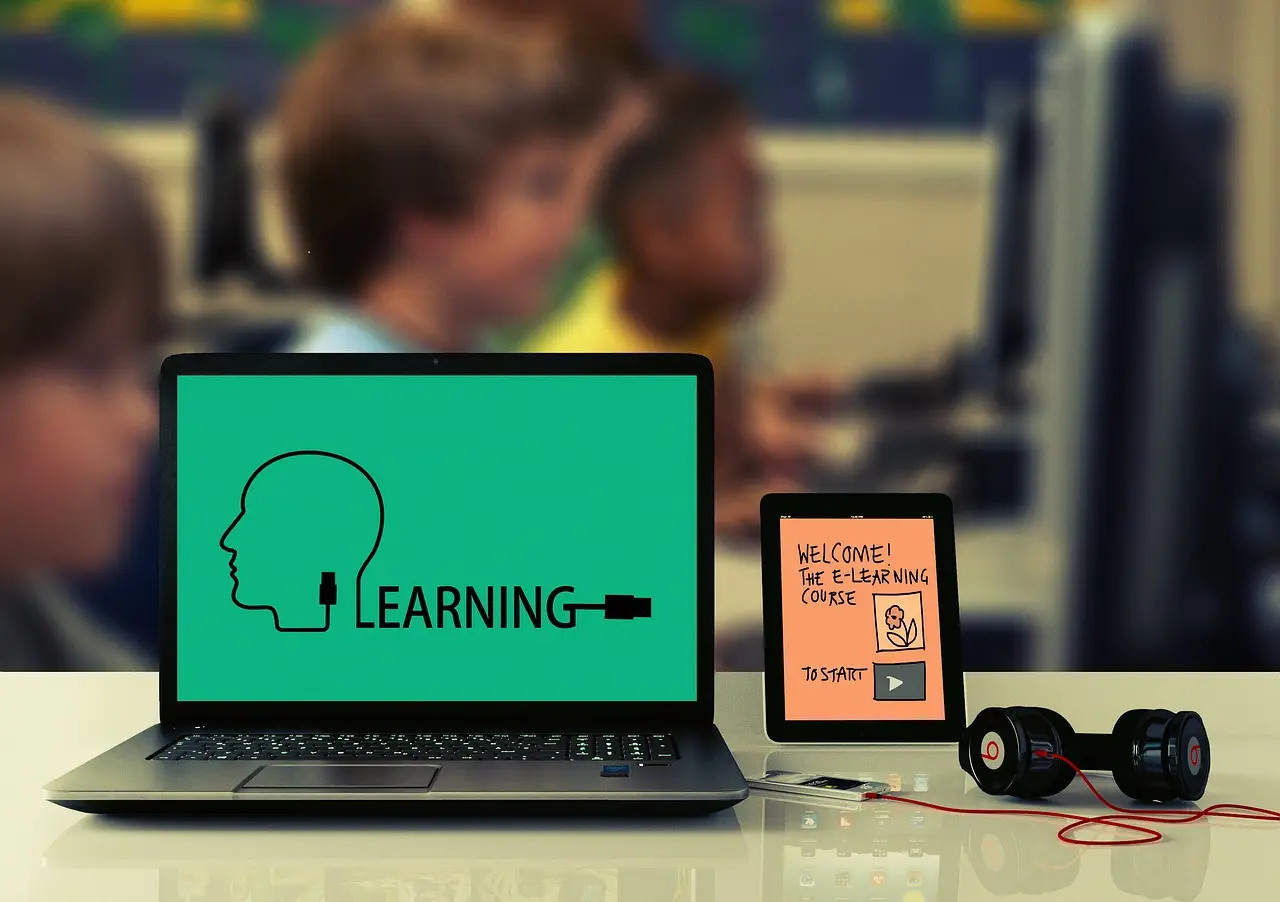
Brazil's Ministry of Education approved new guidelines for artificial intelligence (AI) in schools on November 10, giving schools 12 months to comply. The rules keep educators responsible for pedagogical decisions, meaning choices about teaching and learning, and block several uses of student data and automated analysis.
What changes under Brazil’s new AI guidelines?
Under the policy’s guiding principle, human teachers stay at the center. The Ministry says AI must remain subordinate to education professionals, who retain responsibility for those decisions.
The guidelines prohibit:
- AI systems for social scoring, meaning the use of data to rank or assess people
- Emotion recognition and continuous biometric surveillance, the latter meaning ongoing monitoring using biological indicators
- Automated decisions with a relevant impact on a student's trajectory
- The use of educational data for targeted advertising, meaning advertising selected using student information, or commercial exploitation
Schools have 12 months to adapt their AI use to those restrictions.
In plain terms, educators keep decision-making power while several high-risk AI uses are barred.
Why is Campos skeptical of technology-first schooling?
At Voices 2026, researcher Fábio Campos of Columbia University in the United States spoke with about 50 students from municipal schools in Rio de Janeiro. They sit in the Youth Parliament of the City Council, where they act as child council members by proposing and debating bills.
Campos used the talk to trace communication from clay writing tablets in Uruk, the site of Sumer’s earliest written records around 3,000 B.C., to the latest-generation tablets and mobile phones. Campos said those innovations have facilitated and changed life in society and communication.
He framed the educational task as bringing students into the digital world while preserving responsible technology use. His warning focused on the narratives attached to technological evolution and their effects, especially in education.
Campos said the model of school, the idea of learning and the teacher’s role have long been associated with technology. He identified three recurring narratives:
- Technology represents progress
- Users have no meaningful choice about adopting it
- Devices operate autonomously
Together, Campos said, those narratives shift the burden onto users by implying they will fall behind unless they follow the digital playbook.
He said the framing benefits large technology companies because they pair arguments for technological progress with criticism of education. Some of those companies, he added, have tried to act as managers of educational groups in the United States without success.
Campos said: “When technology comes before the human being, it doesn't work. These narratives sell to students, teachers and schools things that do not work or that have not been tested. It is not about speaking against technology, but we need to discuss it consciously.”
In plain terms, human priorities should shape technology, and schools should not adopt untested claims.
Does generative AI free teachers or weaken learning?
Campos identified generative AI, meaning software that creates content, as a new challenge. He said it carries its own narrative: it will free teachers’ time, and students will learn more. Campos said reality does not show those outcomes.
“The first studies on the use of AI already point to a cognitive deficit, that is, our capacity for reasoning diminishes,” Campos said. “In other words, we will become stupider if we use AI alone. So we must be careful.”
The presentation did not name the studies, sample sizes, methods, age groups or measured outcomes. The cognitive-deficit claim therefore remains broad within the session, and the presentation offers no basis for quantifying it.
Campos also said laws in Brazil and other countries prohibit mobile phones in classrooms. He called those bans one of the first steps in decades to slow technology’s advance in education. He did not identify the other countries, their implementation dates or any evidence of effectiveness.
In plain terms, Campos supports conscious, tested use of AI and defined limits on classroom phones.
What must schools change in the next 12 months?
Schools now have 12 months to align their AI use with teacher authority and restrictions on scoring, surveillance, automated decisions and commercial data use. Under the policy, software cannot replace educators as the responsible decision-makers for a student’s trajectory.
The Ministry’s document does not specify enforcement mechanisms, penalties or a compliance checklist, including how schools should transition away from prohibited tools. The next 12 months will test whether schools can put teacher authority and data restrictions into practice before the deadline.
In plain terms, compliance requires changes to AI use, not merely a revised policy statement.
via oglobo.com (Source)
More from Amara Osei
Show full bio
News editor covering people, launches and day-to-day practice in marketing, advertising, marketing technology, media, SEO and search at Marketing Herald.
408 articles