Premium Water Sales Near $100K at Gwen as US Alcohol Drops 5%
Gwen restaurant made nearly $100,000 from water sales last year as US alcohol consumption fell 5%. Analysts expect premium water to reach $45.2 billion by 2033.
Wire notes
- Premium water revenue at Gwen, Los Angeles, reached nearly $100,000 last year.
- Total US alcohol consumption fell 5% last year, according to IWSR.
- Grand View Research projects the premium water market at $45.2 billion by 2033.
- Primo Brands' premium water revenue grew nearly 32% in the year ended September; its stock rose almost 50% this year.
- A1R cans and bottles sell for $3 to $7 at Miami venues; Liquid Death's 473 ml cans contain 20 calories and 4 grams of sugar.
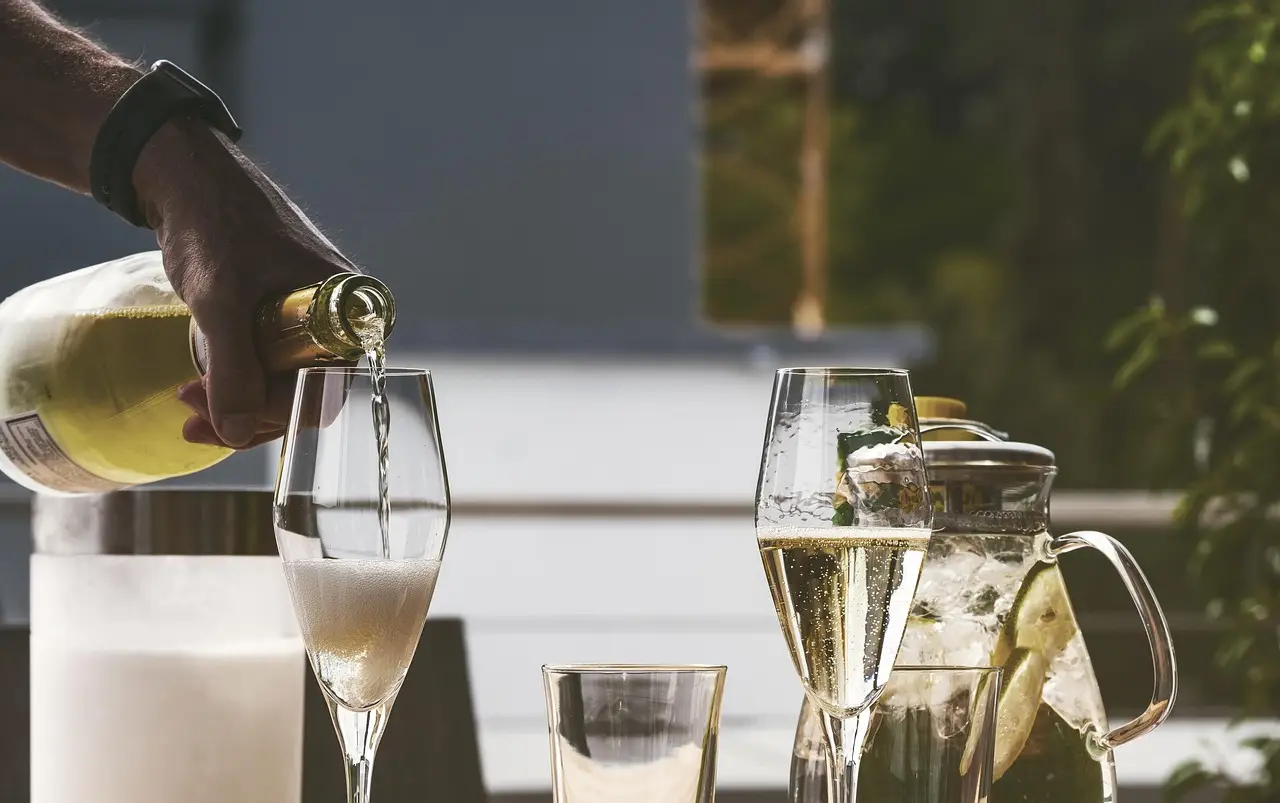
A single Los Angeles restaurant pulled in almost $100,000 last year selling bottled water. Martin Riese, a certified water sommelier (a specialist trained to evaluate and pair waters), built that menu at Gwen, a fine-dining venue in Los Angeles, after guests began asking for more non-alcoholic options about three years ago.
The list is structured like a wine list. It includes Vichy Catalan, a sparkling water from Spain, at $13 a bottle, and Castle Rock, a still water from California, at $12 a bottle. Filtered tap water from the Los Angeles supply remains free.
How big is the premium water market?
Grand View Research analysts expect the market for higher-value still, sparkling and flavored carbonated waters to nearly double, reaching $45.2 billion by 2033. That growth sits against a shrinking alcohol market. Total US consumption of beer, wine, spirits and ready-to-drink beverages fell 5% last year, according to IWSR, a drinks-industry monitor.
Drew Lucido, general manager at Gwen, said supplier pitches have never been so numerous. "There was a Japanese company trying to enter the American market," he said. "I was impressed: they came all the way from Japan just to sell me water."
Riese, who rates and classifies waters worldwide, explains the category's logic: a European spring contains a distinct combination of minerals, salts, metals and ions compared with water from Arkansas. A low-mineral water, for example, pairs well with salads or sushi, he said. He draws a direct parallel to wine: "A Sauvignon Blanc from New Zealand tastes different from one produced in California. It's the same grape, but the flavor is different because it was grown in soils with distinct compositions." Consumers of special waters can detect that variation and will pay for it, according to Riese.
Why are younger consumers the target?
New brands are entering a premium segment long held by Fiji, Perrier, Evian and Voss, using sharp marketing, unusual flavors or a scientific positioning to reach Gen Z. "If you talk to the people at the big Miami nightclubs, you'll see that young people are drinking more water than ever," said Peter Carr, who spent much of his career in alcohol at Bacardi and Diageo and now runs Air Water Ventures, a startup that uses generators to extract humidity from the air and turn it into water. A1R cans and bottles, priced from $3 to $7, sell in Miami hotels and nightclubs, at Miami Heat games and at Inter Miami soccer matches. "Our goal is to reach the premium water consumer: someone who cares about health, shops at Whole Foods and values physical fitness," Carr said.
Scott Dicker, senior director of research and insights at Spins, a market-analysis firm, frames the pricing story: "Food prices are rising, but premium products continue to perform well. Overall, what we see is that people expect more from their beverages."
What turned Saratoga into a growth case?
Saratoga Spring Water, known for its cobalt-blue glass bottles on white-linen tables, found a new audience when fitness influencer Ashton Hall posted viral videos of push-ups beside a Saratoga bottle, priced at $2 to $4, and of dunking his face into a bowl of ice, lemons and Saratoga water as a morning ritual. Sales surged for owner Primo Brands. A partnership with Hall never closed; the company instead signed BMX athlete Nigel Sylvester and WNBA star Skylar Diggins. "When we started partnering with people who reach younger consumers, they quickly connected with the brand," said Kheri Tillman, chief marketing officer at Primo Brands. "We found a way to make a premium water truly accessible for these moments and this consumer profile." Revenue from its premium brands, Saratoga and Mountain Valley Spring Water, grew nearly 32% in the year ended September. The company's stock has risen almost 50% this year.
Zach Knipe, 47, an account manager at an orthopedic surgical products company in Hershey, Pennsylvania, said he got "hooked" on Saratoga sparkling water years ago while working at an upscale steakhouse. "Sparkling water stays cold longer in glass bottles," he said. "I have a bottle in my fridge right now."
Where is the category heading next?
The boundaries of "water" are blurring, with brands adding protein, fiber and collagen, or moving closer to soft drinks. Liquid Death, which revived the category eight years ago with tallboy aluminum cans, skull artwork and satirical ads, now earns most of its sales from sparkling waters flavored like sodas, including "Mt. Death" (Mountain Dew) and "Doctor Death" (Dr Pepper). Its 473 ml cans contain no caffeine, 20 calories and 4 grams of sugar. "Killer Cola" flopped, admits founder and CEO Mike Cessario: "People are crazy for Coca-Cola or Pepsi. That flavor divided opinions." He argues new entrants must "create a 'cool' brand to justify the premium price, or offer a water with minimal functional differences from the competition," since mass brands like Aquafina (PepsiCo) and Dasani (Coca-Cola) win on volume.
Sauna Water, a sparkling botanical line spun off a year ago from a Walker, Minnesota brewery, targets sauna users, said founder Jeff Vondenkamp. He suggested about $4 a can for "Nordic Spruce" and "Forest Fields"; some retailers charged over $7. Supermarket pricing will run closer to $3.50 a can. Bars now buy the botanical waters as gin alternatives, and coffee shops carry them. "I can walk into practically any coffee shop in Minneapolis and they say: 'Sure, let's try it,'" Vondenkamp said. "Gone are the days when restaurant options were a soda, apple juice and mineral water. Today coffee shops offer 10, 12 or 14 different beverages."
For marketers, the signal is clear: the non-alcoholic slot on a menu has become a premium category in its own right, and Gen Z is setting the price tolerance.
via oglobo.com (Source)
More from Elena Vasquez
Show full bio
Senior reporter covering technology and product news in marketing, advertising, marketing technology, media, SEO and search at Marketing Herald.
408 articles
More on the wire
- Midsize Brewers Rework Marketing as U.S. Drinking Hits 1939 Lows
- Challenger CPG Brands Reshape Category Marketing as Deal Value Doubles
- Liquid I.V. Hires Former Poppi CMO Jenny Danzi to Lead Brand
- Grey Goose Rethinks US Open Play as Honey Deuce Nears Saturation
- Mr. Pibb grew volume more than 20% in Q2 2026