SEO & Search
Google Search Profile Badges Expose the Publisher Traffic Crisis
Google's new Search Profile badge guide arrives as AI Search starves publishers of traffic. SEJ's Roger Montti calls the feature a "break the glass measure" for declining referrals.

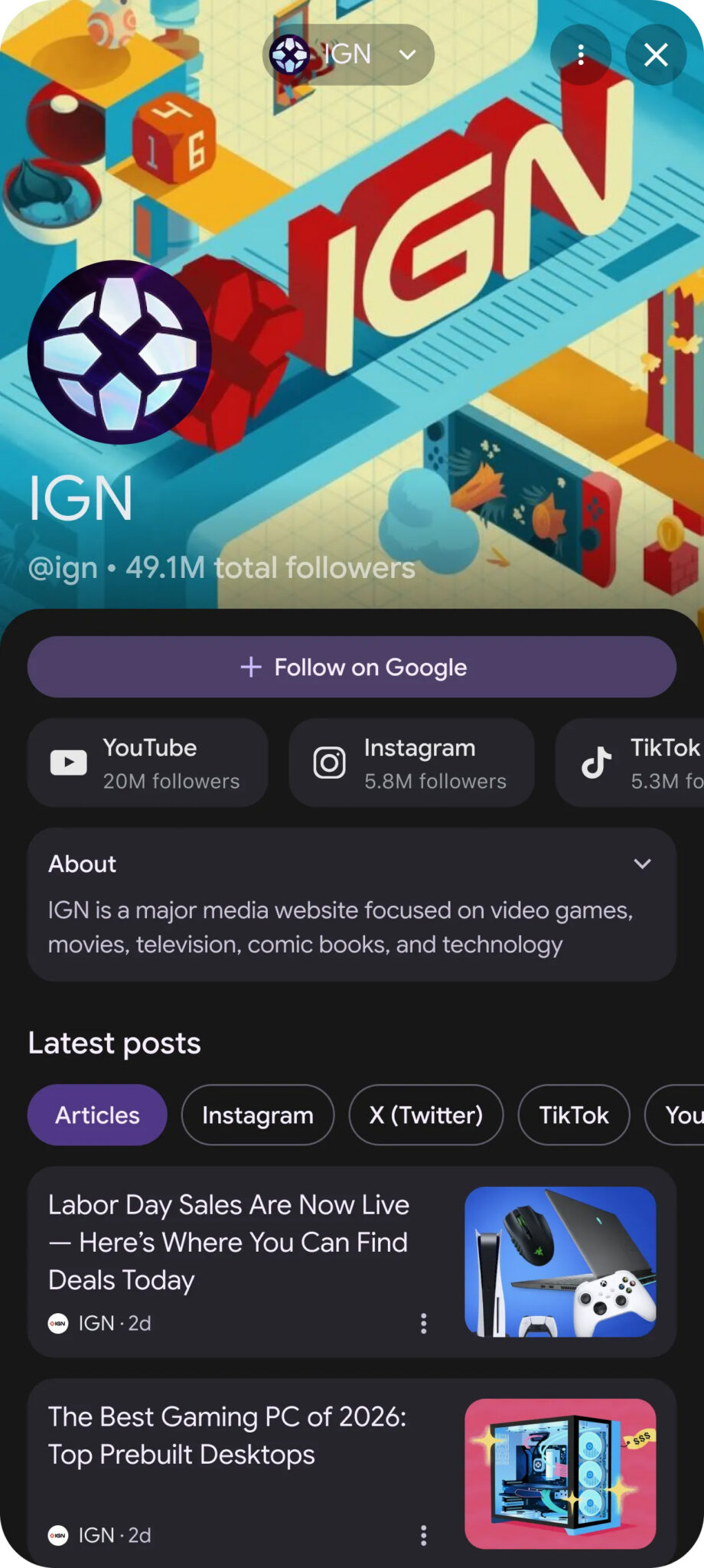
Google has published a new guide explaining how publishers can add a Search Profile badge to their websites. The badges are designed to help audiences find a publisher's Search Profile on Google. But according to Search Engine Journal's Roger Montti, the feature itself is a symptom of — and a reaction to — the decline in search traffic driven by Google's AI Search.
What the Search Profile Contains
Google's Search Profile currently offers four main features:
- Enhanced Knowledge Panels
- Centralized Content Hub
- Google Discover Integration
- Multi-brand Management
The feature is live for United States-based publishers and creators. A Search Profile acts as a central location on Google for a publisher's or creator's content across their website and platforms such as YouTube, Facebook, Instagram, TikTok, and X. According to the guide, when users follow a Search Profile, connected content becomes more likely to appear for them in Google Discover.
What the New Guide Covers
The documentation consolidates four topics in one place:
- What Search Profiles do
- How to add the badge
- How Google wants the badge presented
- Where to get help
The Help Route Is Problematic
Publishers who run into implementation issues are directed to the Google Search Central Help Community — a forum staffed by other users and volunteers, not Google employees.
Montti pulls no punches on the experience. The community, he writes, has "one of the worst, if not the worst, navigational structures of any community I have ever seen, worse than Facebook."
Users seeking help with Search Profile badges must choose from four categories: Crawling, Indexing, and Ranking; Security, Malware, and Hacked Sites; Structured Data; and Search Console. The most relevant category — Crawling, Indexing, and Ranking — leads not to sub-categories but to a list of the latest posts, many of them users dropping links to their own sites. Montti calls it "a link fest."
His broader criticism is blunt: "Given how difficult it is to navigate through Google's help 'community' either to research topics or to find help, it's weird that Google continues to point users to it to find help."
Why Publishers Actually Need the Badges
The core argument of the piece is that the badge feature exists because AI Search is sending far less traffic to publishers. Google has not acknowledged this and continues to insist otherwise, Montti writes, but Search Profiles would not be necessary if AI Search were driving more traffic, not less.
"The reality and fact of the matter is that Google is starving the web ecosystem of traffic," he writes. "The reality is that the Search Profile Badge is a break the glass measure on the part of Google to make up for all the traffic that AI Search has taken away."
He poses two rhetorical questions for the industry:
- Should the Search Profile Badge feature be treated as a sign that Google cares for publishers and creators?
- Should everyone pretend that the state of referrals from Google is fine?
What Would Be Better
Montti suggests a more useful path: Google could use follower data to influence what other users see. This would help publishers build bigger audiences while showing users more relevant content. Instead, he argues, the badge system points to Google becoming a "follower ecosystem."
His closing argument goes further: "Maybe we should admit that AI Search is a war against the very web ecosystem that enabled AI Search to exist in the first place."
What This Means for Marketers
For marketing and publishing teams, the takeaway is practical. U.S.-based publishers can now implement Search Profile badges following Google's documentation, and Discover visibility for followed profiles may offer a partial offset to declining organic referrals. But the underlying trend — AI-generated search results reducing outbound clicks — remains unaddressed by Google, and publishers should plan their traffic strategies accordingly.
Related coverage from Search Engine Journal notes that Google Search Profiles are now available at 10,000 followers.
Source: Search Engine Journal (https://www.searchenginejournal.com/google-search-profile-badges-expose-the-publisher-traffic-crisis/589724/) / Source: developers.google.com (https://developers.google.com/search/docs/appearance/search-profiles)
Source: Search Engine Journal; Source: developers.google.com