MarTech & AI
AI Hiring Tools Push 70% of Ethnic Minority Candidates to Mask CV Identity
New PLU research finds 70% of ethnic minority candidates hide CV elements to beat AI screening, as a campaign demands disclosure laws and bias audits.
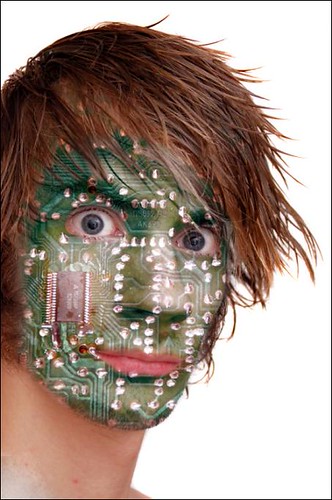
Automated job screening is forcing 70% of ethnic minority talent to alter or hide elements of their CV, according to new research from workplace equity organisation People Like Us (PLU) and Censuswide, based on a survey of 2,000 UK jobseekers.
The figure stands at 60% across all candidates, but ethnically diverse candidates are "disproportionately" affected, PLU finds. They apply for a third more roles than their white counterparts, get rejected faster (41% within an hour of applying, versus 32% of white peers), are significantly more likely to strip identity markers from their CVs, and are nearly three times more likely to remove their country of origin (14% versus 5%).
They are also more than twice as likely to remove religious or cultural markers (14% versus 6%), while one in 20 have changed their name.
Most of the sample (80%) have been rejected for a job in the past two years. Nearly three quarters (74%) of those suspect at least one rejection was generated automatically without a human reading their application. Only 15% were told by an employer that an automated system was used.
Employers in the dark on their own tools
The research points to a serious governance gap. More than a quarter (28%) of employers using automated screening do not monitor whether outcomes differ by ethnicity or other protected characteristics. Of those who do check, 82% found differences, and 36% described them as "meaningful".
Some 30% of decision-makers do not know, or are not sure, how their own screening tool scores candidates. Only around 35% of hiring managers could identify each of the rights candidates already hold under UK Data Protection law.
"Employers aren't the villains here, most resort to automations in good faith to cope with a surging volume of applicants and four in 10 did it believing they were reducing bias," said People Like Us co-founder Sheeraz Gulsher.
"However, good faith isn't governance – when 82% of the employers who checked found outcomes vary by ethnicity, 'We didn't know' stops being a defence. The Equality (Race and Disability) Bill gives the Government the vehicle to make transparency the rule to enable fairer access to jobs for all. Automation has a clear role in managing surging application numbers – but checks and balances must keep recruitment equitable for all."
Candidates fight back with AI
Jobseekers are already gaming the systems. Two-thirds (66%) have tried to "game" recruitment software, 27% have used AI tools such as ChatGPT to rewrite their CV to beat AI screening, and 13% have hidden keywords in white text.
Almost a third (31%) of candidates have decided not to apply for a job they believed they were qualified for, suspecting AI would screen them out. This rises to 39% among ethnic minority candidates.
Rejections arrive at speed. More than a third (34%) of rejected jobseekers have been turned down within an hour; for 9%, within five minutes. Over two-fifths (44%) have been rejected before the deadline closed, and 64% of UK candidates suspect they were turned down without a person ever seeing their application. On average, jobseekers are "ghosted" on 35% of their applications.
Three quarters (75%) did not know they may have a legal right to request a human review of an automated rejection under UK Data Protection law. Some 42% have wanted to challenge a rejection but found no way to do so. Of those who did ask for a human review, only 28% received one.
Mental health toll
Over a third (38%) of the PLU sample say rapid automated rejections knock their confidence, while 34% have been put off applying for other roles. Some 8% have sought mental health support due to job rejections, rising to one in 10 ethnic minority candidates. Most respondents (81%) agree applying for jobs today feels like "trying to pass a test for a machine, not being seen as a person".
'Reject the Rejections' campaign
In response to the findings, People Like Us has launched 'Reject the Rejections', devised with creative agency Worth Your While. The campaign centres on 'Dear [Name]', a four-minute short film starring British actor Ebenezer Gyau, which turns the language of real rejection emails sent to ethnic minority candidates into a spoken-word performance.
JCDecaux Community Channel is supporting the campaign over the autumn, with an initial run across 19 large-format digital sites in London from 16 September expected to generate an estimated 154,000 impressions, ahead of a national launch in November. A 30-second cut of the film will run as a two-week national cinema campaign from 2 October, in partnership with Pearl & Dean.
Developed with Planes Studio, PLU has also built a tool to help rejected candidates ask whether automation was used on their application, and to remind jobseekers they may have the right to request a human review under existing UK Data Protection laws.
PLU is calling on employers to disclose their use of automation in hiring and commit to independent bias audits, and on the UK Government to mandate disclosure of automated or AI-assisted screening in job adverts. Most jobseekers back the move: 71% say independent audits would increase their confidence in automated recruitment, while 82% believe disclosure in job adverts should be required by law.
Marketing Week's Opening Up campaign is pushing for the democratisation of marketing careers.
Source: Marketing Week (https://www.marketingweek.com/ethnic-minority-talent-ai-hiring-bias/)
Source: Marketing Week